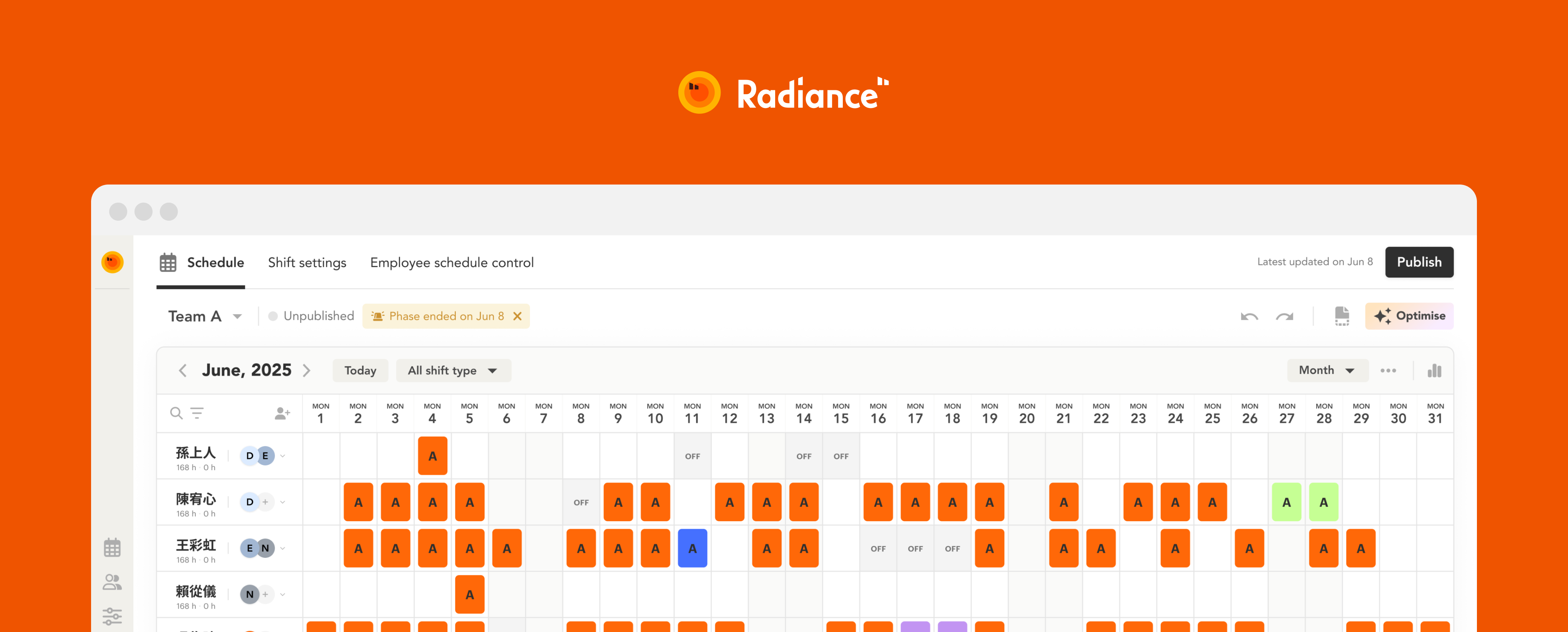
Radiance App
Radiance is an AI scheduling tool for healthcare teams. It helps hospitals create staff schedules in minutes instead of hours. As a co-founder and the founding designer, I helped build the product from the start. I turned complex scheduling rules into a simple, easy-to-use system, and worked on research, information structure, UI design, prototypes and testing alongside the other founders and engineers.
Problem
Healthcare scheduling was a highly manual, error-prone process. Schedulers spent 6–10 hours building each schedule while balancing complex staffing requirements, labor regulations, employee preferences, and shift constraints — with a 15% error rate requiring repeated corrections. This created downstream problems: last-minute schedule changes, inefficient staffing, overtime costs, and disputes between staff and schedulers.
Turn complex scheduling rules into a configurable system
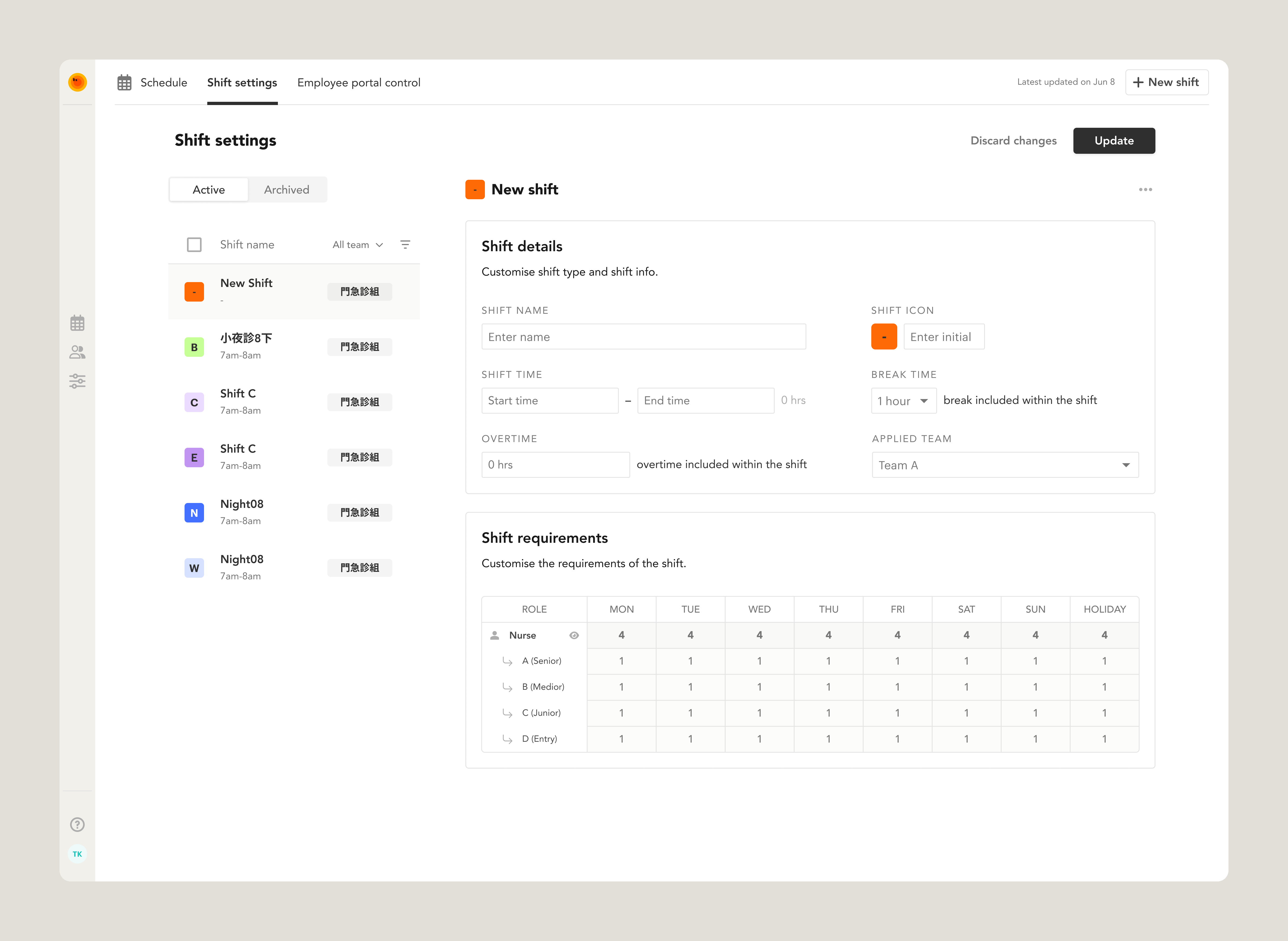
I translated complicated staffing and labor requirements into structured scheduling rules — maximum working hours, consecutive workdays, minimum rest periods, overtime limits, night-shift restrictions, and department-specific staffing requirements — so the system could automatically generate and validate schedules against real constraints.
Design AI + human control as one workflow
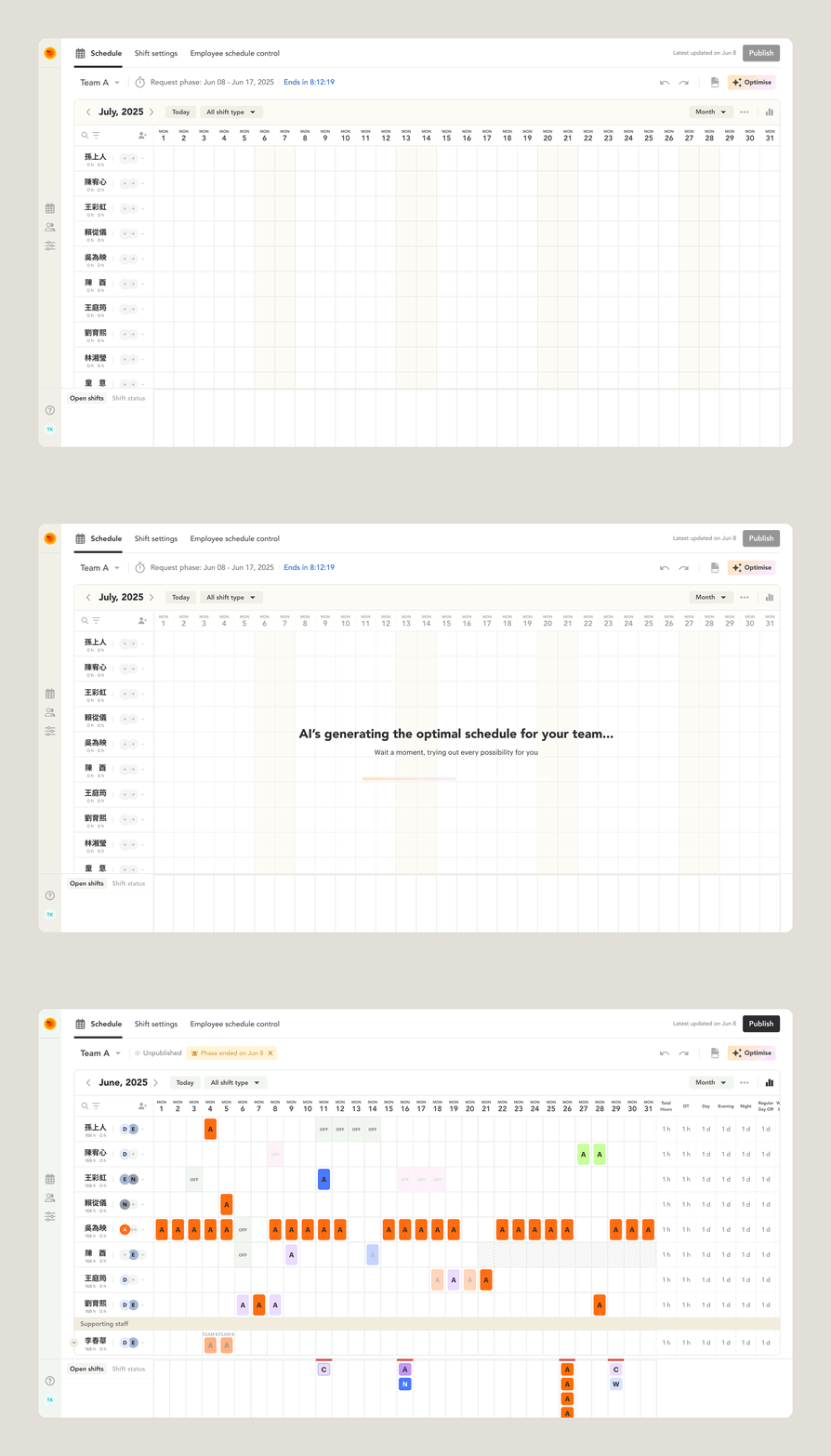
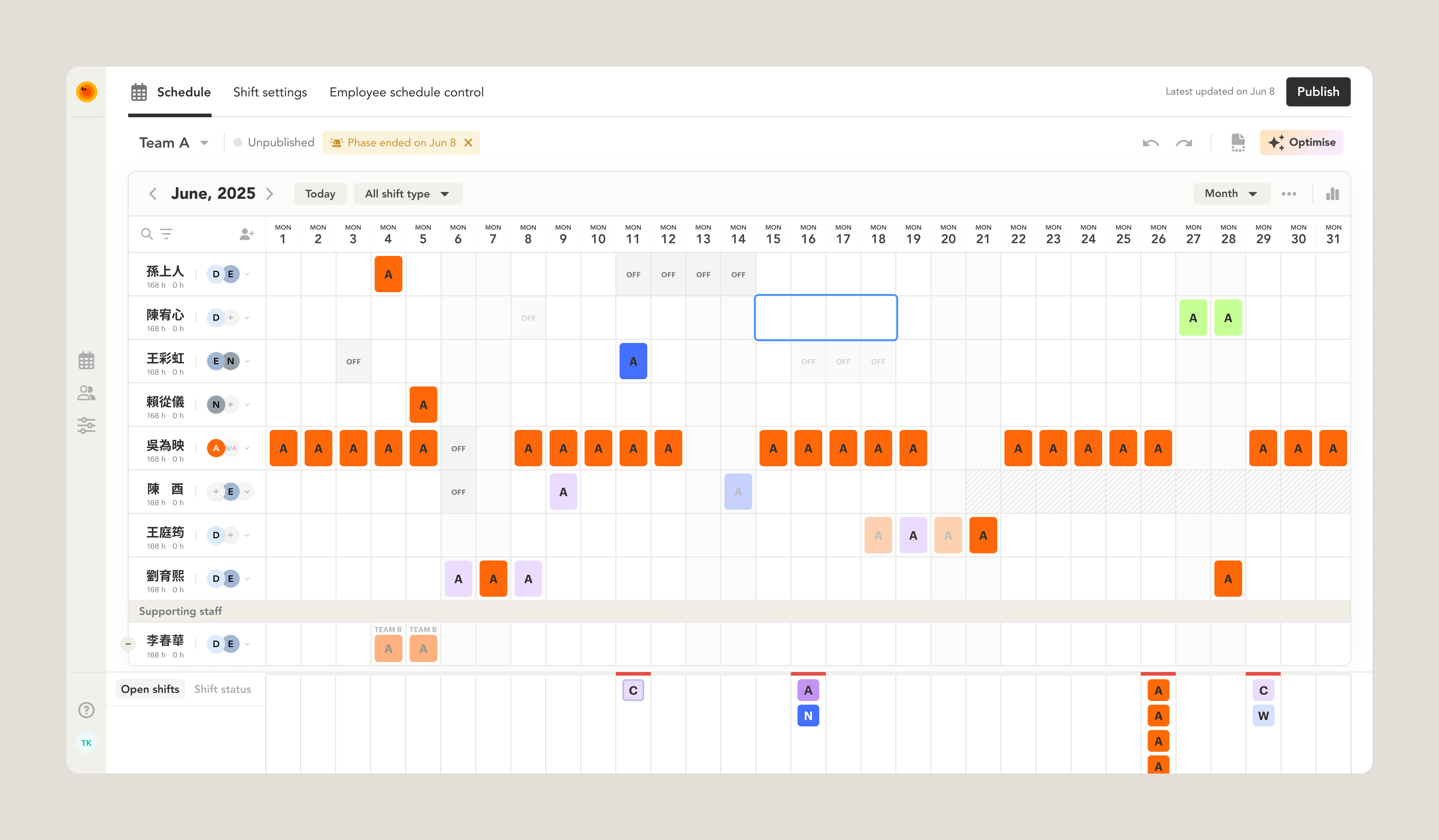
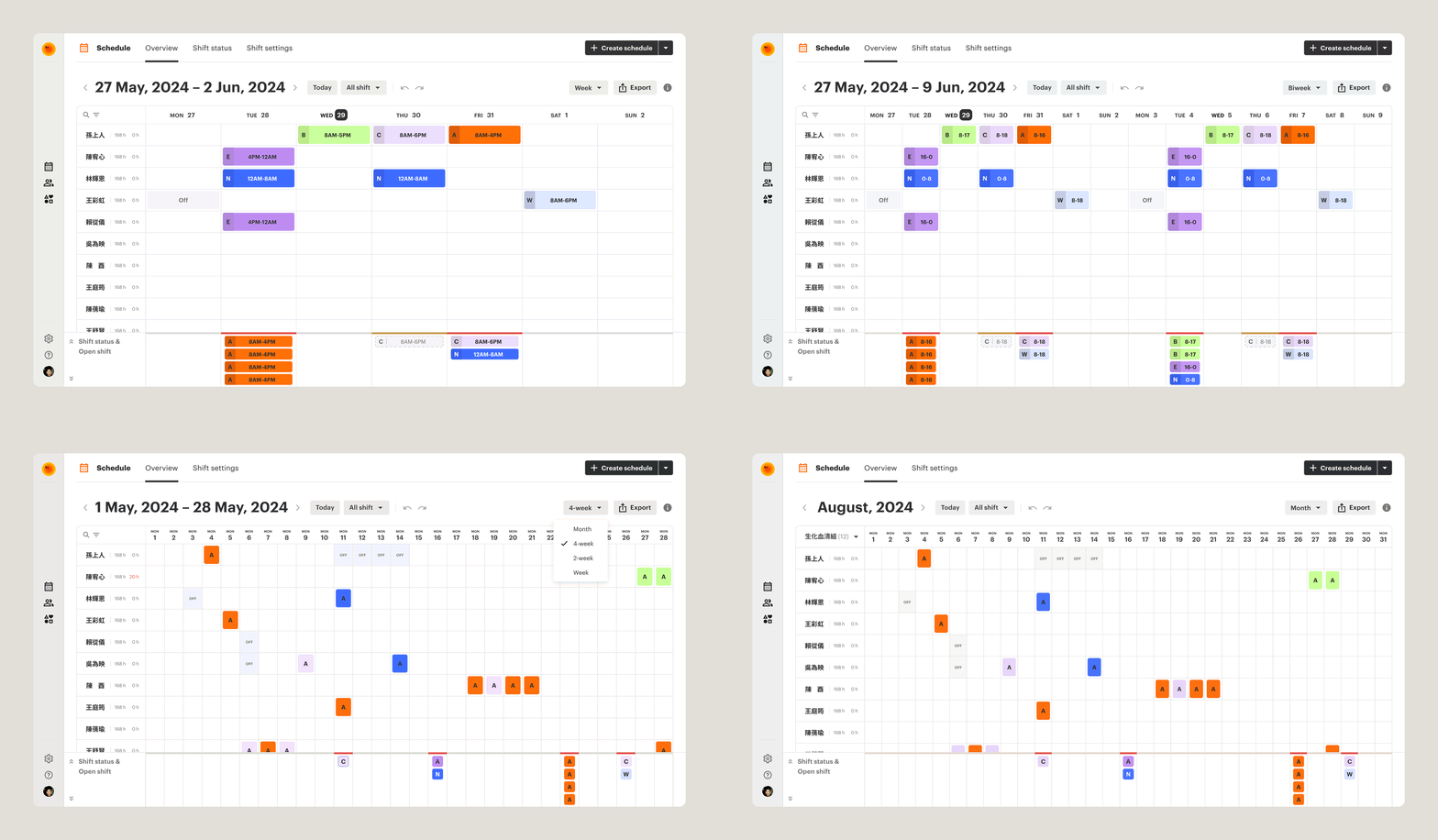
Rather than treating AI as a black box, I designed a workflow where schedulers could generate schedules automatically, review coverage at a glance, identify rule violations, and manually adjust assignments through an Excel-like interface. The system handled the complexity while keeping the final decision in the hands of the scheduler.
Solving the trust problem
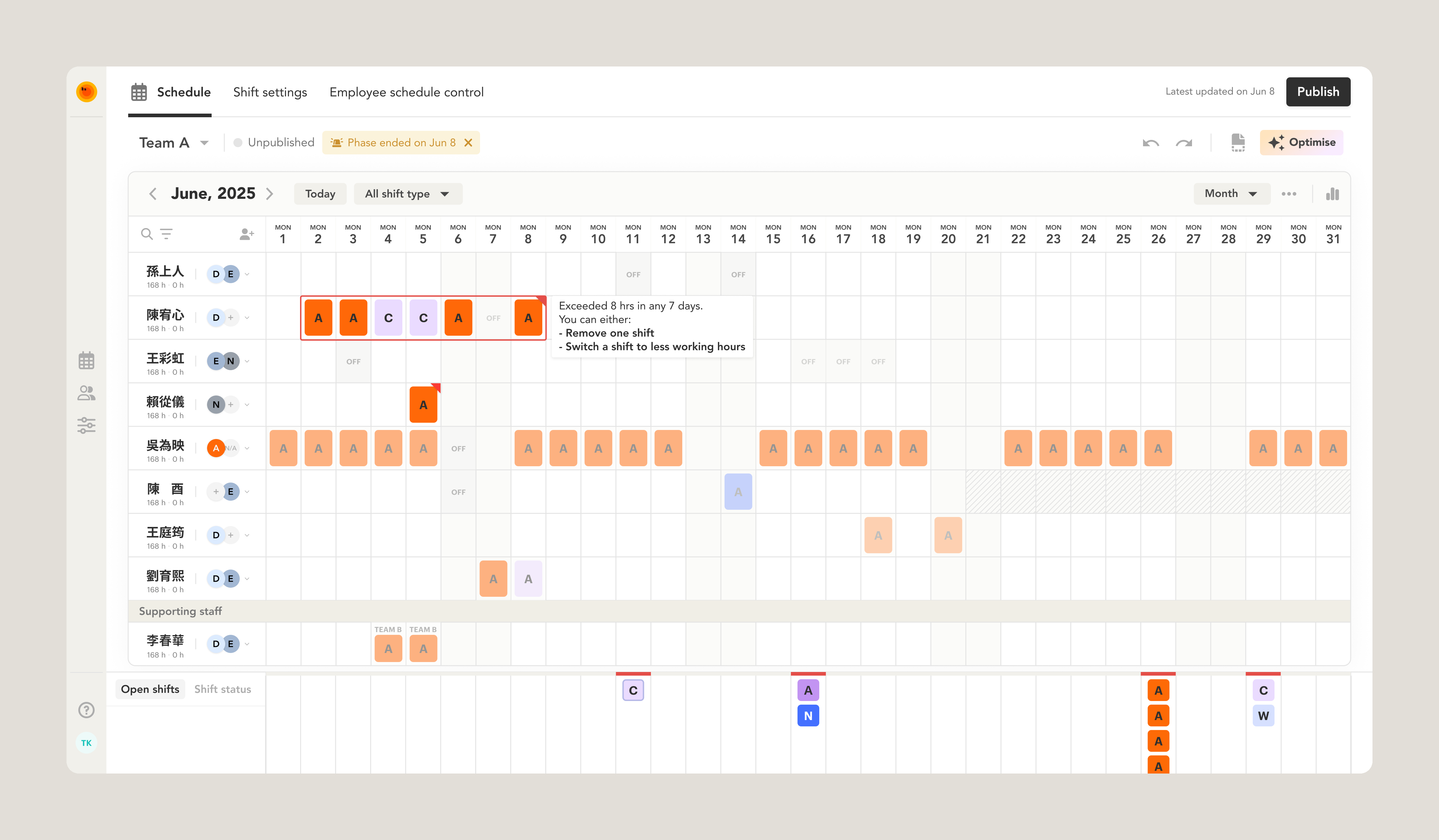
After launching the MVP, we observed schedulers opening a separate Excel sheet alongside the system to manually verify the AI-generated results. This was a classic algorithm aversion problem — the system produced accurate schedules, but didn't show its reasoning. Users couldn't trust what they couldn't understand. We solved this by adding a shift status overview for coverage visibility — mirroring what they were used to seeing in Excel — and conflict explanations that surfaced why each assignment was made, so users could check the results inside the system instead of in Excel.
Extend scheduling to employees through a mobile portal
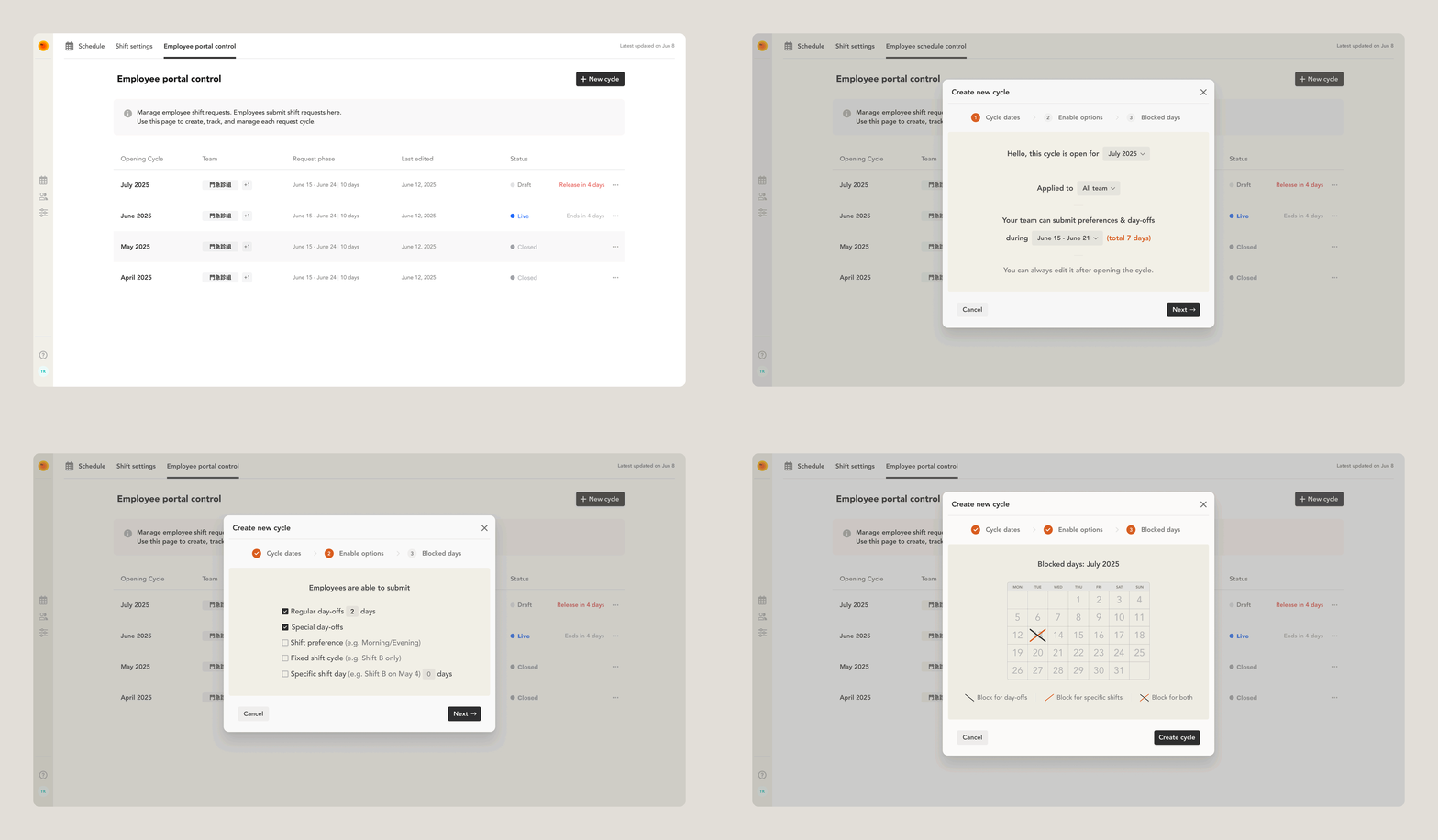
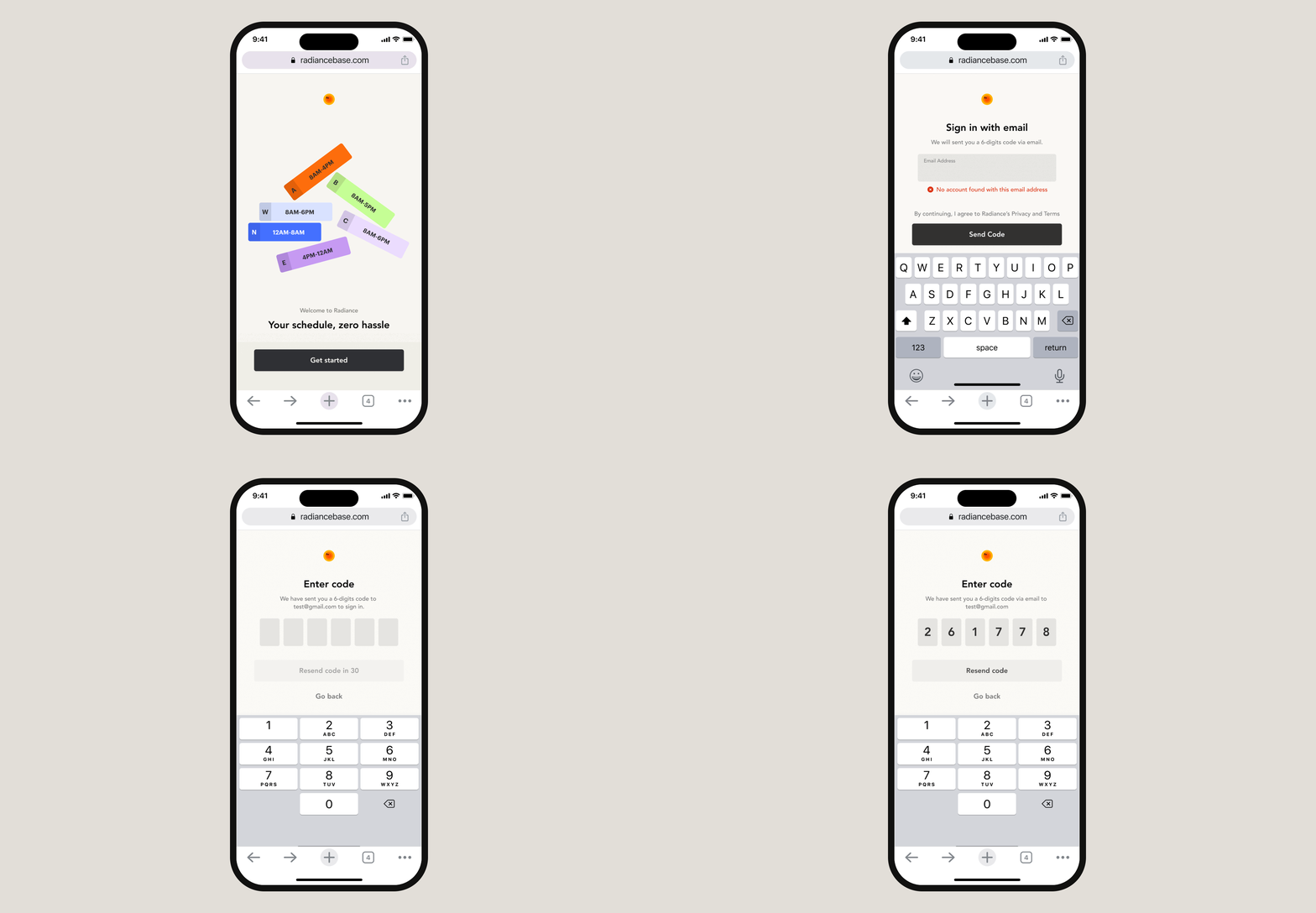
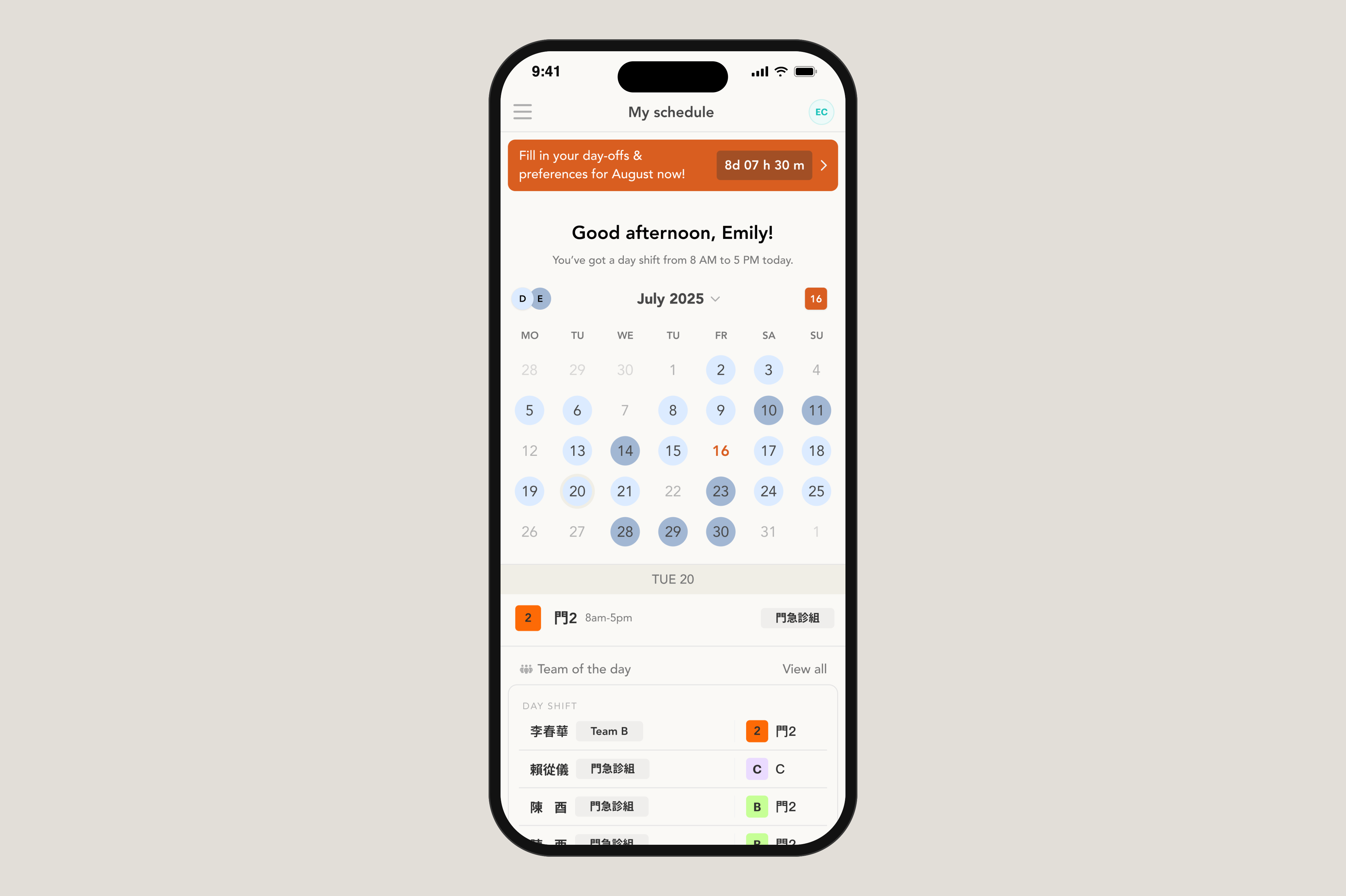
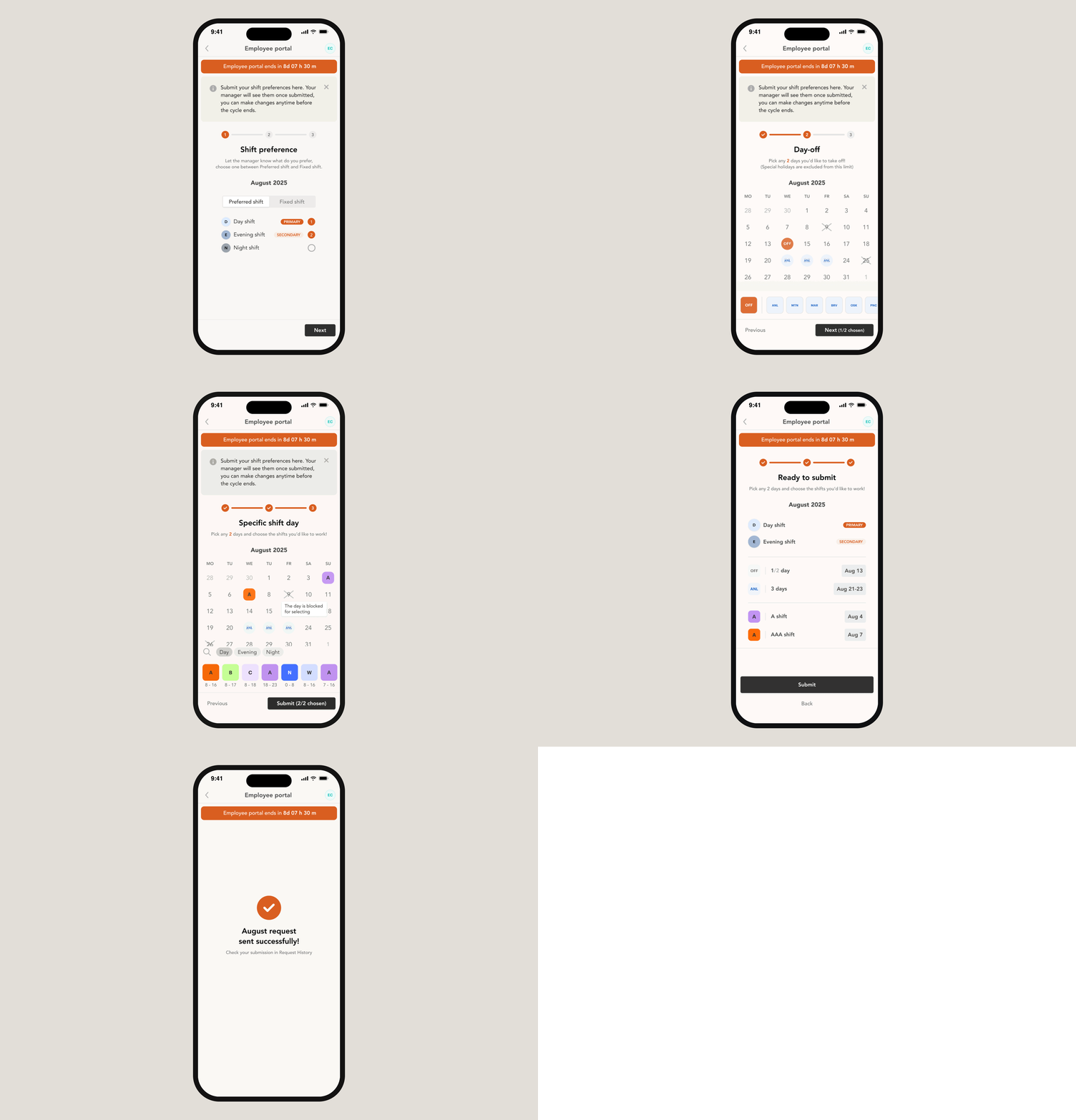
I also designed the employee-facing mobile portal, allowing staff to view their schedules, manage preferences and availability, submit leave requests, and stay informed about schedule changes — without relying on the scheduler or paper-based communication. This created a two-sided experience: administrators manage and optimize the schedule; employees interact with and influence their own schedule.
Outcome
Radiance reduced scheduling administrative time by 82%, improved scheduling efficiency by 47×, and achieved 99% scheduling accuracy. For large medical institutions, the system saved 100+ working hours per month and reduced inefficient shifts from 6.8% to 0.5%. The mobile portal shifted scheduling from a scheduler-centric process to a more employee-centric workflow, reducing the need for back-and-forth communication around schedules, preferences, and leave.